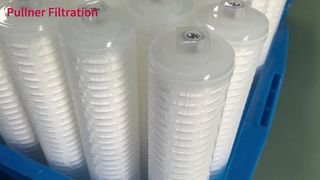
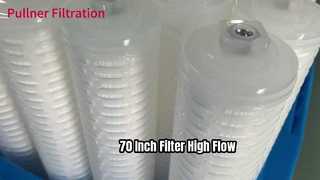
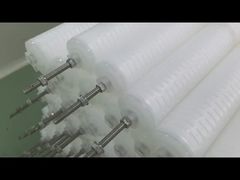
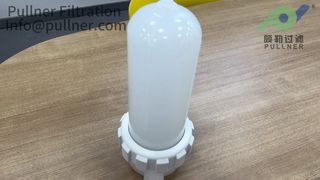
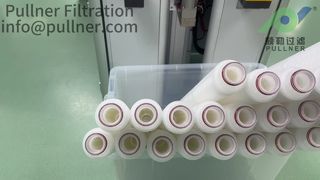
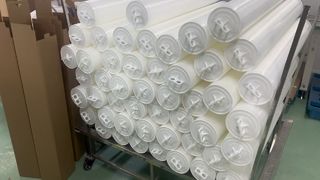
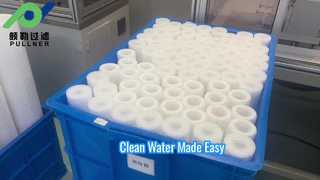
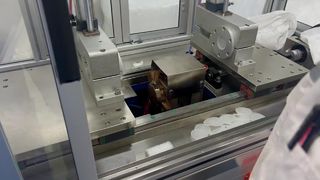
Brief: Watch the demo to catch practical tips and quick performance insights into the PHFX PP String Wound Condensate Polishing Filter Cartridge. This video showcases its dense honeycomb structure, explains its application in power plant condensate iron removal, and demonstrates how its 70-inch length reduces the number of filters and housing size needed.
Related Product Features:
Features a dense honeycomb structure formed by high-performance fibers wound tightly around a porous center core.
Specifically designed for condensate polishing in power plants to remove iron, usable with or without resin pre-coating.
Standard 70-inch (1778mm) length provides a large filtration area, reducing the number of filters and housing size required.
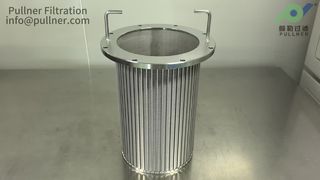
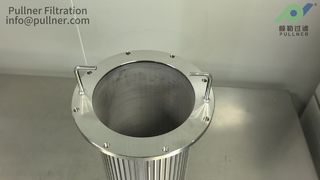
Constructed with PP fiber media and available center cores in SS304 or SS316L for durability.
Operates at high temperatures up to 250°C and handles a maximum differential pressure of 3.0 bar at 90°C.
Recommended flow rate of 2.5 m³/h, designed for inlet water quality of less than 1000 ppb.
Suitable for various industries including power plants, chemical processing, food and beverage, and biopharmaceuticals.
Offers long service life, high flow capacity, and reduced investment and manpower requirements in applications.
FAQs:
What is the primary application of the PHFX PP string wound filter cartridge?
It is primarily used for condensate polishing in power plants to remove iron from the water system, and it can be used with or without resin pre-coating for enhanced filtration.
What are the operating temperature and pressure limits for this filter cartridge?
The PHFX PP string wound filter cartridge can operate at temperatures up to 250°C and withstand a maximum operating differential pressure of 3.0 bar at 90°C, ensuring reliable performance in demanding conditions.
How does the 70-inch length of the filter cartridge benefit the filtration system?
The 70-inch (1778mm) length provides a large filtration area, which helps reduce the total number of filters needed and minimizes the required housing size, leading to cost savings and efficient system design.